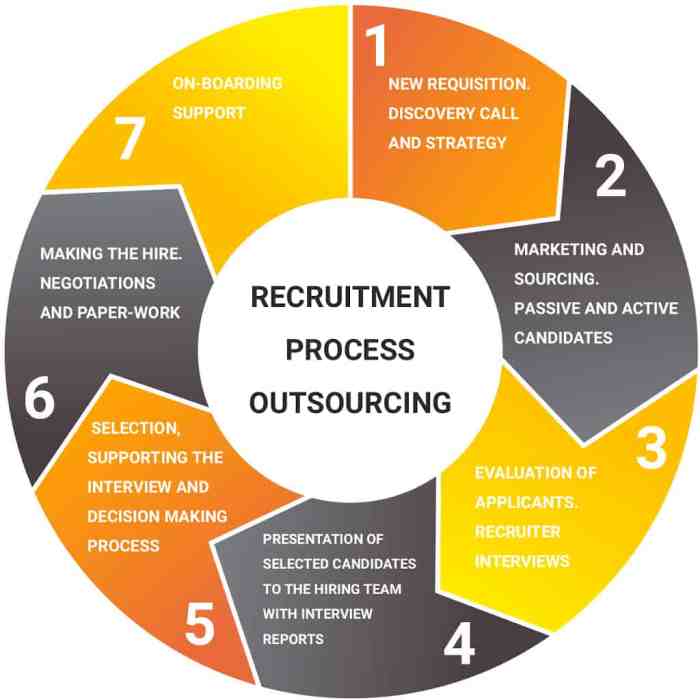
As Recruitment process outsourcing (RPO) gains traction, this opening passage invites readers into a realm of expertise, ensuring an informative and engaging read.
Exploring the nuances of RPO and its impact on modern recruitment practices is crucial for organizations seeking efficient hiring solutions.
Introduction to Recruitment Process Outsourcing (RPO)

Recruitment Process Outsourcing (RPO) is a strategic approach where an organization partners with a specialized external service provider to manage some or all of its recruitment processes. This can include sourcing, screening, interviewing, and onboarding new employees.
Key Benefits of RPO Services for Organizations
- Cost Efficiency: RPO services can help reduce recruitment costs by streamlining processes and utilizing the expertise of external specialists.
- Scalability: RPO providers can quickly adjust the recruitment strategy based on the organization’s hiring needs, ensuring flexibility and efficiency.
- Access to Talent: RPO services often have access to a larger talent pool and advanced recruitment technologies, leading to better quality hires.
- Time Savings: Outsourcing recruitment processes allows internal HR teams to focus on core business activities, saving time and increasing productivity.
Difference Between RPO and Traditional In-House Recruitment Processes
RPO differs from traditional in-house recruitment processes in several ways. While in-house recruitment is managed internally by an organization’s HR team, RPO involves partnering with an external provider who specializes in recruitment. RPO providers offer expertise, resources, and technology that may not be available in-house, leading to improved efficiency and effectiveness in the hiring process.
Components of RPO

Recruitment Process Outsourcing (RPO) typically includes a range of components to provide a comprehensive service to clients. These components are designed to streamline the recruitment process, save time, and improve the quality of hires.
Specialized Recruitment Tasks
RPO providers commonly outsource specialized recruitment tasks such as sourcing candidates, conducting initial screenings, coordinating interviews, managing recruitment technology, and providing analytics and reporting. By handling these tasks, RPO providers allow companies to focus on their core business activities while ensuring a smooth and efficient recruitment process.
Customized Services
RPO providers customize their services to meet the specific needs of each client. This customization may involve tailoring recruitment strategies to target specific talent pools, developing employer branding initiatives, implementing diversity and inclusion programs, or providing additional support for high-volume hiring periods. By understanding the unique requirements of each client, RPO providers can deliver targeted solutions that drive recruitment success.
Advantages of Recruitment Process Outsourcing
Recruitment Process Outsourcing (RPO) offers several advantages to organizations looking to streamline their hiring process and improve overall recruitment efficiency.
Scalability and Flexibility
- RPO services provide organizations with the flexibility to scale up or down their recruitment efforts based on hiring needs. This ensures that companies can quickly adjust their workforce size without compromising on the quality of hires.
- By partnering with an RPO provider, organizations can tap into a global talent pool and access specialized expertise in various industries and roles, allowing for a more agile and adaptable recruitment process.
Reduced Time-to-Hire and Cost Savings
- RPO helps organizations reduce the time-to-hire by leveraging technology, data analytics, and streamlined processes to identify and attract top talent quickly and efficiently.
- Through RPO partnerships, companies can also save on recruitment costs by eliminating the need for in-house recruitment teams, reducing overhead expenses, and improving the quality of hires, leading to lower turnover rates and increased productivity.
Successful Recruitment Strategies
- One example of a successful recruitment strategy implemented through RPO is the use of employer branding and candidate engagement initiatives to attract passive candidates and build a strong talent pipeline for future hiring needs.
- Another effective strategy is the use of data-driven recruitment practices, such as predictive analytics and targeted sourcing, to identify high-potential candidates and make informed hiring decisions that align with the organization’s strategic goals.
Challenges and Considerations in RPO
Implementing Recruitment Process Outsourcing (RPO) solutions can come with its own set of challenges for organizations. From selecting the right provider to overcoming obstacles in the process, there are several key considerations to keep in mind.
Common Challenges in RPO Implementation
- Lack of alignment between the RPO provider and the organization’s culture and values.
- Difficulty in transitioning existing recruitment processes to the RPO model.
- Resistance from internal stakeholders who are accustomed to traditional recruitment methods.
- Ensuring data security and compliance with regulations while outsourcing recruitment processes.
Importance of Selecting the Right RPO Provider
- Look for a provider with experience in your industry and a track record of successful RPO implementations.
- Consider the provider’s technology and tools to ensure they align with your organization’s needs and goals.
- Evaluate the provider’s ability to scale and adapt to your organization’s changing recruitment requirements.
Considerations for Making the Decision
- Define clear objectives and expectations for the RPO partnership to ensure alignment between both parties.
- Establish key performance indicators (KPIs) to measure the success of the RPO engagement.
- Include a detailed service level agreement (SLA) to Artikel responsibilities, deliverables, and timelines.
Overcoming Potential Obstacles in the RPO Process
- Provide adequate training and communication to internal stakeholders to help them understand the benefits of RPO.
- Regularly monitor and evaluate the RPO provider’s performance against established KPIs to ensure alignment with organizational goals.
- Address any issues or concerns promptly to maintain a successful RPO partnership.
Recruitment Services Overview
Recruitment services are crucial for organizations looking to attract and retain top talent. These services help in identifying, sourcing, and hiring the right candidates for various roles within a company. There are different types of recruitment services available in the market, each catering to specific needs and requirements.
Types of Recruitment Services
- Staffing Agencies: These agencies provide temporary, contract, or permanent staffing solutions to organizations. They maintain a pool of candidates and match them with job openings based on the client’s requirements.
- In-House Recruitment: In-house recruitment teams are part of the organization and are responsible for handling the entire recruitment process internally. They work closely with hiring managers to fill vacancies within the company.
- Recruitment Process Outsourcing (RPO): RPO providers take on all or part of the recruitment process for a company. They act as an extension of the internal recruitment team and are responsible for sourcing, screening, and hiring candidates.
Comparison with Other Recruitment Models
- RPO vs Staffing Agencies: While staffing agencies focus on filling immediate vacancies, RPO providers work strategically to build talent pipelines and enhance the overall recruitment process.
- RPO vs In-House Recruitment: In-house recruitment teams are limited by internal resources, whereas RPO providers bring external expertise and scalability to the recruitment process.
Role of Recruitment Services in Talent Acquisition
Recruitment services play a vital role in talent acquisition by ensuring that organizations have access to a diverse pool of qualified candidates. They help in streamlining the hiring process, reducing time-to-fill, and improving the quality of hires. Additionally, recruitment services assist in workforce planning by aligning recruitment strategies with the organization’s overall business objectives.
In conclusion, Recruitment Process Outsourcing (RPO) emerges as a strategic tool for optimizing recruitment processes, enhancing scalability, and driving organizational success.
Frequently Asked Questions
What are the key benefits of using RPO services?
RPO services offer scalability, flexibility, and cost savings for organizations looking to streamline their recruitment processes.
How do RPO providers customize their services?
RPO providers tailor their services to meet the specific needs of clients by understanding their unique recruitment requirements and challenges.
What challenges are commonly faced in RPO implementations?
Common challenges include integration issues, cultural differences, and selecting the right RPO provider that aligns with organizational goals.


